
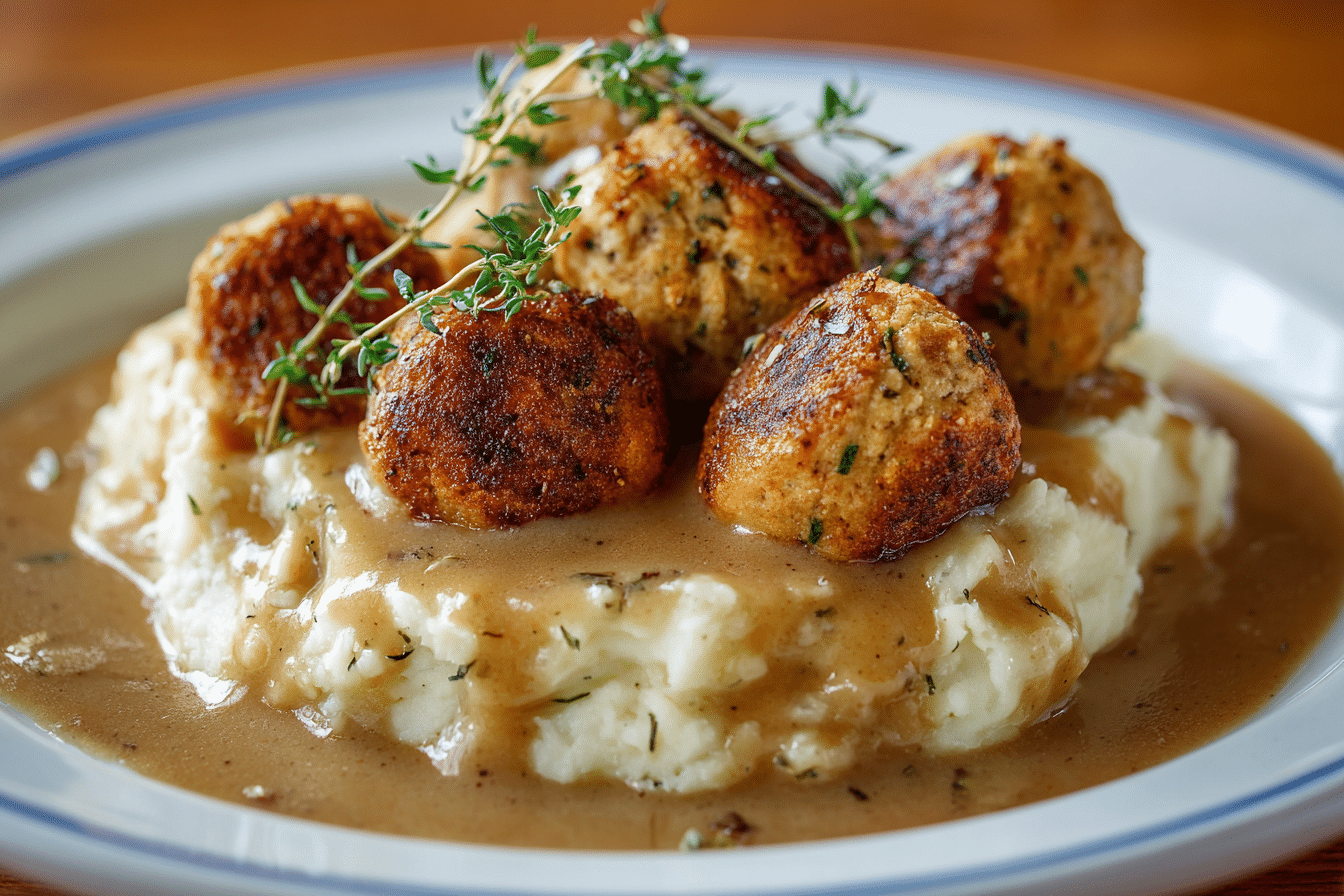
Turkey Stuffing Balls are the ultimate comfort food: crispy on the outside, tender and flavorful on the inside, and packed with all the nostalgic taste of Thanksgiving in every bite. Whether you’re using up holiday leftovers or making them from scratch, these savory bites are perfect as a side dish, appetizer, or even a grab-and-go lunch.
Stuffing balls originated as a fun and practical way to serve dressing individually — no slicing, no scooping — just perfectly portioned bites that crisp up beautifully in the oven. They’re ideal for entertaining, especially when you want stuffing without taking up oven space with a casserole.
With turkey, herbs, and buttery breadcrumbs in every bite, these stuffing balls are like little bundles of holiday flavor — and they freeze wonderfully too.
Ingredients Overview
The best stuffing balls start with a classic base of bread, aromatic vegetables, herbs, and savory meat. Here’s what you’ll need and how each ingredient contributes.
Base Ingredients:
-
Cooked turkey (shredded or chopped) – Adds moisture and protein. Use leftover roasted turkey breast or thigh meat for richness.
-
Day-old bread cubes – Provide the structure. Slightly stale bread works best as it absorbs moisture without turning mushy. Use white, sourdough, or whole wheat.
-
Eggs – Bind everything together so the balls hold their shape.
-
Chicken or turkey broth – Moistens the mix and adds a deep, savory flavor. Go for low-sodium if using store-bought.
Aromatics & Flavor:
-
Onion & celery – Classic stuffing vegetables. Dice finely and sauté until softened.
-
Butter – Adds richness and helps bring the aromatics to life.
-
Fresh parsley & sage – Give that unmistakable Thanksgiving aroma. You can also use thyme or rosemary for variation.
-
Salt & black pepper – Essential for seasoning.
-
Poultry seasoning (optional) – A blend of sage, thyme, and other herbs to deepen flavor.
Optional Add-Ins:
-
Cranberries – For a sweet contrast.
-
Cooked sausage – To make it heartier.
-
Parmesan – For a salty, umami-rich edge.
Ingredient Swaps:
-
Gluten-free? Use gluten-free bread and ensure broth is GF.
-
Dairy-free? Use oil instead of butter.
-
Vegetarian? Skip the turkey and double up on sautéed mushrooms for a meaty texture.
Step-by-Step Instructions
These stuffing balls are easy to shape, bake, and serve — with no fancy tools required.
1. Sauté Aromatics
In a skillet over medium heat, melt the butter. Add finely diced onion and celery and sauté for 5–6 minutes until soft and fragrant. Let cool slightly.
2. Prepare the Bread Base
In a large bowl, add bread cubes. Pour in the sautéed vegetables along with chopped turkey, parsley, and any other herbs you’re using.
Add a generous pinch of salt, black pepper, and poultry seasoning if desired.
3. Add Liquid and Bind
Whisk eggs and broth together in a small bowl, then pour over the bread mixture. Gently toss everything until the bread is moistened and everything is evenly distributed.
Let the mixture sit for 10 minutes so the bread can fully absorb the liquid.
You want the mixture moist but not soggy. If it feels dry, add more broth a few tablespoons at a time.
4. Form the Balls
Preheat the oven to 375°F (190°C). Line a baking sheet with parchment paper.
Using your hands or a cookie scoop, shape the mixture into 2-inch balls. You should get around 12–16 depending on size.
Place them on the prepared baking sheet about an inch apart.
5. Bake
Bake for 25–30 minutes, or until the stuffing balls are golden brown and crisp on the outside. The centers should be hot and set.
For extra crispness, you can broil the tops for the last 2 minutes — just watch carefully to avoid burning.
Let cool for a few minutes before serving — they firm up a bit more as they rest.
Tips, Variations & Substitutions
Expert Tips:
-
Use day-old bread. Fresh bread turns mushy too fast.
-
Chop everything finely. Smaller bits help the balls stay compact and cohesive.
-
Don’t overwork. Gently shape the mixture to avoid dense balls.
Flavor Variations:
-
Apple-sausage stuffing balls: Add ½ cup cooked sausage and ½ diced apple for a sweet-savory mix.
-
Spicy version: Add chopped jalapeños or crushed red pepper flakes.
-
Cheesy stuffing balls: Mix in shredded sharp cheddar or Parmesan before baking.
Make-Ahead & Freezing:
-
Make ahead: Form balls and refrigerate (uncooked) up to 24 hours in advance.
-
Freeze cooked stuffing balls: Cool completely, freeze on a tray, then store in a freezer-safe bag. Reheat at 350°F (175°C) until warmed through.
Serving Ideas & Occasions
Turkey stuffing balls are surprisingly versatile and work well for both formal and casual occasions:
-
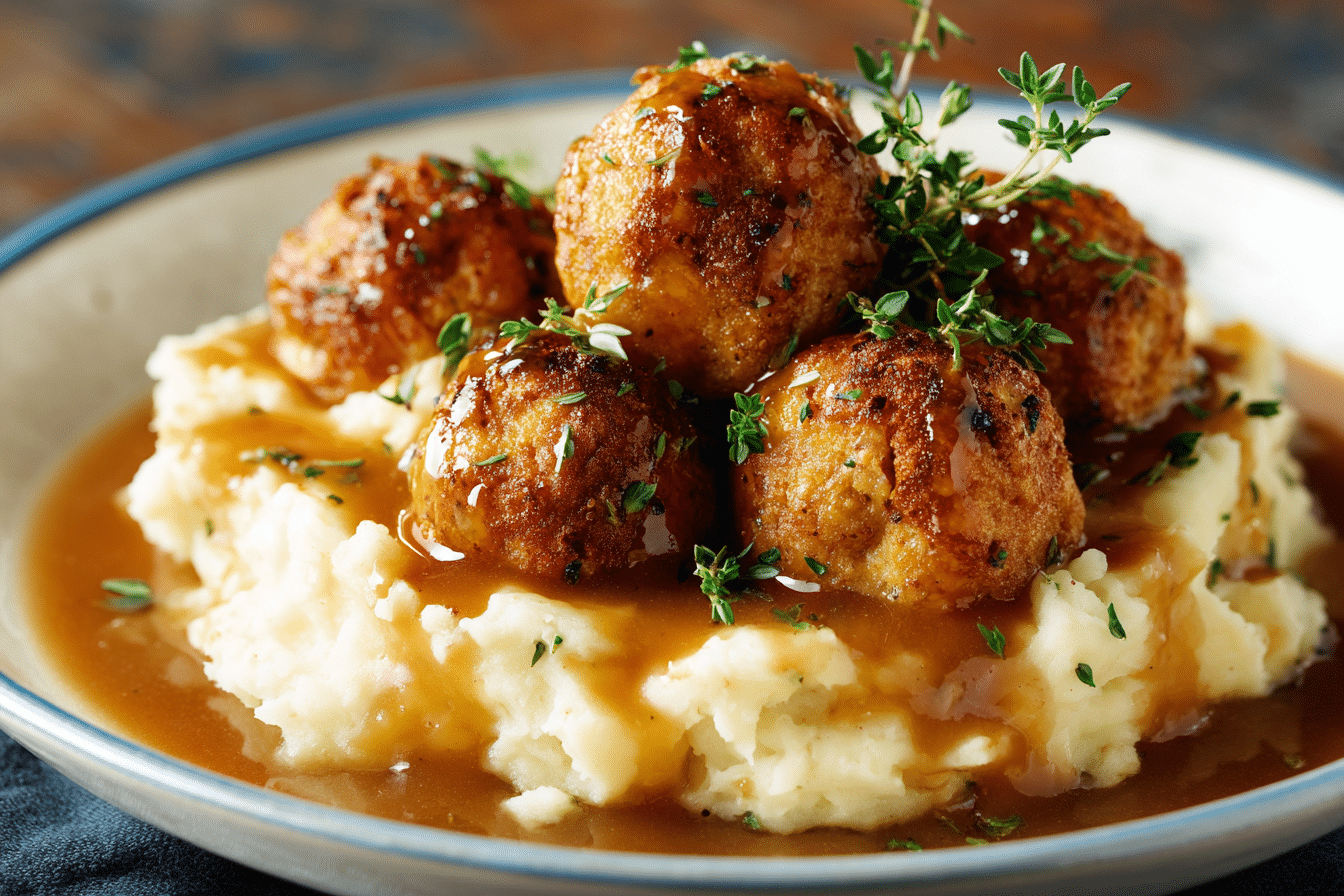
Holiday side dish – Serve with gravy alongside turkey or ham.
-
Appetizer platter – Pair with cranberry sauce or aioli for dipping.
-
Weeknight leftovers – Use them as a meal prep option with roasted vegetables.
-
Brunch – Serve alongside eggs for a savory breakfast side.
They’re also a fun finger food for parties, potlucks, and Friendsgiving gatherings. The individual shape makes them easy to plate, serve, and enjoy.
Nutritional & Health Notes
Stuffing balls provide a well-rounded bite with carbs, protein, and flavor.
-
Protein comes from the turkey and eggs.
-
Carbohydrates are supplied by the bread base.
-
Fat from butter and eggs adds richness, while vegetables bring fiber and micronutrients.
To make a lighter version:
-
Use whole grain bread for more fiber.
-
Reduce butter and add more broth.
-
Bake instead of pan-frying for less oil.
They’re filling and satisfying without being overly heavy — a great way to enjoy holiday flavors in moderation.
FAQs
Q1: Can I make these stuffing balls without turkey?
A1: Yes! You can make them vegetarian by omitting the turkey and increasing the vegetables or adding mushrooms or sautéed lentils for texture.
Q2: What bread is best for stuffing balls?
A2: Day-old white or sourdough bread works great. You can also use multigrain or cornbread for added flavor. Avoid soft sandwich bread unless it’s toasted or slightly dried out.
Q3: How do I keep stuffing balls from falling apart?
A3: Make sure the mixture is moist enough and allow the bread to soak thoroughly before shaping. Eggs act as a binder, so don’t skip them. Chill before baking if the mixture feels loose.
Q4: Can I pan-fry instead of bake?
A4: While baking is easier and lighter, you can pan-fry them in oil over medium heat, turning until all sides are browned. They’ll be crispier and more indulgent.
Q5: Do they taste good reheated?
A5: Absolutely! Reheat in the oven or toaster oven at 350°F for 8–10 minutes until heated through and crisped. Microwaving works but may soften the exterior.
Q6: Can I use stuffing mix instead of bread?
A6: Yes — boxed stuffing mix works in a pinch. Prepare it slightly drier than package directions so it holds shape when forming the balls.
Q7: What sauces go well with stuffing balls?
A7: Turkey or chicken gravy is classic. You can also try cranberry sauce, garlic aioli, or a herbed yogurt dip for something different.
PrintTurkey Stuffing Balls – A Savory Holiday Favorite Made Easy
Savory stuffing balls made with turkey, herbs, and bread — crispy on the outside and tender inside. A perfect holiday side, appetizer, or meal prep snack.
Ingredients
-
2 cups cooked turkey, shredded or chopped
-
4 cups day-old bread cubes
-
1 small onion, finely diced
-
2 celery stalks, finely diced
-
2 eggs, lightly beaten
-
½ cup chicken or turkey broth (plus more as needed)
-
2 tbsp butter
-
2 tbsp fresh parsley, chopped
-
1 tsp dried sage or poultry seasoning
-
Salt and pepper to taste
-
Optional: ¼ cup dried cranberries, cooked sausage, or Parmesan
Instructions
-
Preheat oven to 375°F (190°C). Line baking sheet with parchment.
-
Sauté onion and celery in butter until soft. Cool slightly.
-
In a large bowl, mix bread, turkey, herbs, and sautéed vegetables.
-
Whisk eggs and broth; pour over mixture and toss gently. Let soak 10 minutes.
-
Form into 2-inch balls and place on baking sheet.
-
Bake 25–30 minutes until golden and firm. Broil last 2 minutes for crispiness if desired.
Notes
Freeze cooked balls for up to 3 months. Reheat at 350°F for 10–15 minutes.
Add-ins like sausage, cheese, or cranberries add great variation.