
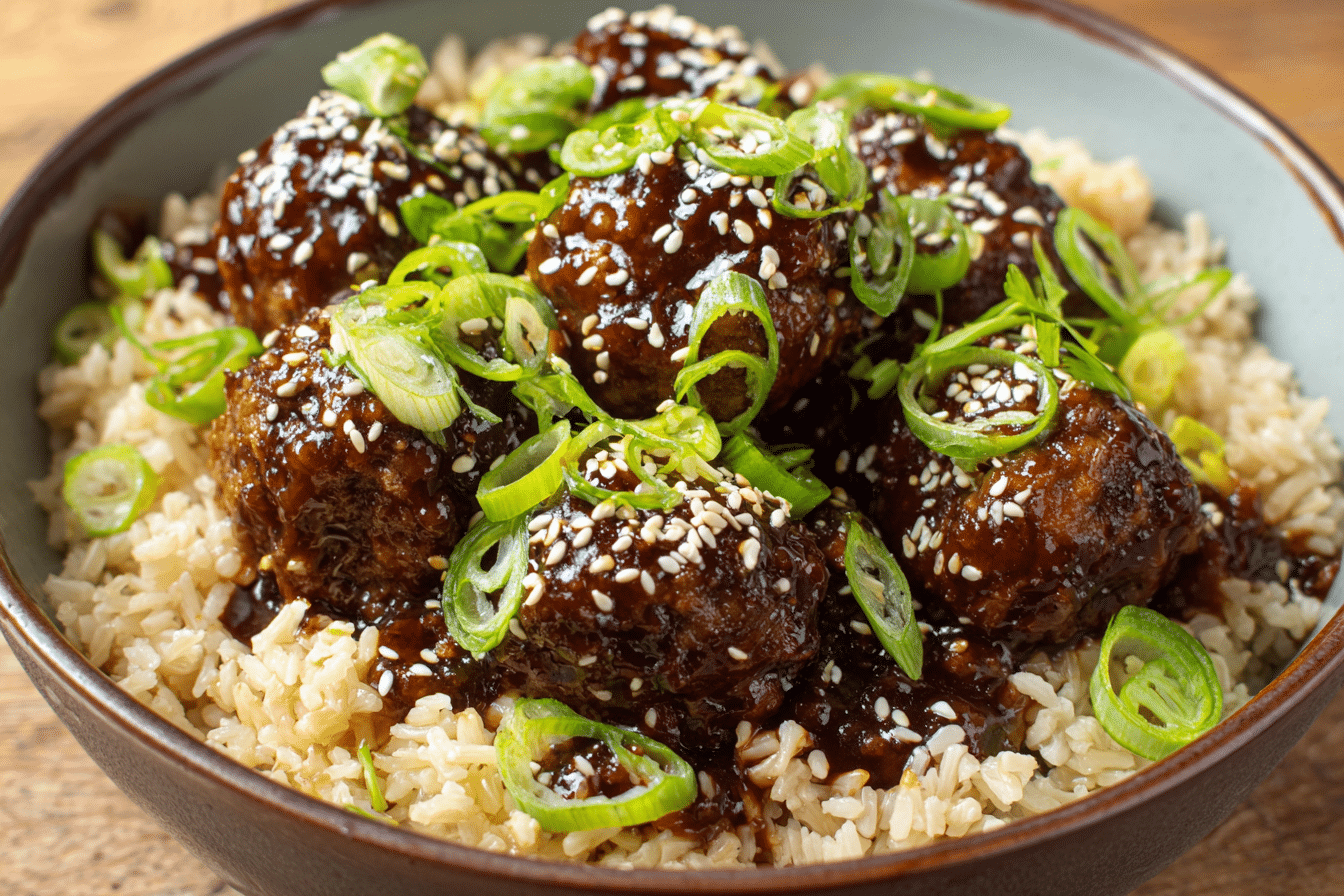
Mongolian Beef Meatballs are a fun and flavorful twist on the classic takeout dish. By transforming the bold, saucy magic of Mongolian beef into juicy, bite-sized meatballs, you get all the rich flavor in a form that’s perfect for appetizers, meal prep, or a cozy dinner.
This recipe pairs tender ground beef meatballs with a sticky soy-based glaze loaded with garlic, ginger, and brown sugar. The meatballs soak up every drop of the sweet-savory sauce, making them juicy and irresistible. Whether served over rice, tucked into lettuce cups, or enjoyed on their own, these meatballs are a surefire crowd-pleaser.
Inspired by Chinese-American cuisine, this dish captures the signature flavors of Mongolian beef in a way that’s approachable and easy to make ahead.
Ingredients Overview
Each ingredient in this dish plays an important role—both in building flavor and creating the perfect meatball texture.
Ground Beef
Use 80/20 or 85/15 ground beef for the best balance of flavor and tenderness. Leaner blends may dry out. Ground pork or a pork-beef blend also works beautifully for extra richness.
Breadcrumbs
Breadcrumbs help bind the meatballs while keeping them soft inside. Panko breadcrumbs add lightness, but regular breadcrumbs or crushed saltines are just as effective.
For gluten-free diets, use gluten-free breadcrumbs or crushed rice crackers.
Egg
The egg acts as a binder, helping the meatballs stay together during baking.
Garlic & Ginger
Fresh garlic and ginger give both the meatballs and sauce their signature kick. Grate or finely mince for even distribution. Powdered versions work in a pinch, but fresh delivers much better flavor.
Scallions
Chopped scallions add mild onion flavor and a pop of color. They’re mixed into the meatballs and also added as garnish.
Soy Sauce
Used both in the meatballs and the glaze, soy sauce adds umami depth. Tamari or coconut aminos are good alternatives for gluten-free versions.
Brown Sugar
This provides the sweetness that makes Mongolian sauce so addictive. Dark brown sugar gives a richer molasses flavor, but light brown sugar is a fine substitute.
Cornstarch
Cornstarch thickens the sauce to a glossy, clingy consistency. You can also use arrowroot or tapioca starch.
Sesame Oil
Just a dash in the sauce brings nuttiness and aroma. It’s potent, so use sparingly.
Optional Add-Ins
-
Red pepper flakes or chili paste for heat
-
Finely chopped water chestnuts for crunch
-
Shredded carrots for added sweetness and color
Step-by-Step Instructions
Making Mongolian Beef Meatballs is simple and quick. Here’s how to do it:
1. Make the Meatballs
In a large bowl, combine:
-
1 lb ground beef
-
1/2 cup breadcrumbs
-
1 egg
-
2 cloves garlic, minced
-
1 tablespoon grated fresh ginger
-
2 scallions, finely chopped
-
2 tablespoons soy sauce
-
Pinch of salt and black pepper
Mix gently with your hands or a fork—don’t overwork the meat. Form into 1½-inch balls and place on a parchment-lined baking sheet.
2. Bake the Meatballs
Preheat oven to 400°F (200°C). Bake meatballs for 15–18 minutes, or until cooked through and browned. You can broil them for the last 2 minutes for extra color.
Alternatively, pan-fry the meatballs in a skillet over medium heat until golden on all sides, then finish in the oven.
3. Make the Mongolian Sauce
While the meatballs are baking, whisk together in a saucepan:
-
1/3 cup soy sauce
-
1/4 cup water
-
1/3 cup brown sugar
-
1 tablespoon cornstarch
-
1 tablespoon rice vinegar (optional, for tang)
-
2 teaspoons minced garlic
-
1 tablespoon grated ginger
-
1/2 teaspoon sesame oil
Bring to a simmer over medium heat, stirring constantly. The sauce should thicken in 2–3 minutes to a glossy glaze. Reduce heat and keep warm.
4. Combine Meatballs & Sauce
Once meatballs are done, transfer them to the sauce and gently toss until evenly coated. Simmer together for 2–3 minutes so the flavors can marry.
5. Garnish and Serve
Top with chopped scallions and sesame seeds. Serve hot over steamed rice, in lettuce cups, or with stir-fried veggies.
Tips, Variations & Substitutions
-
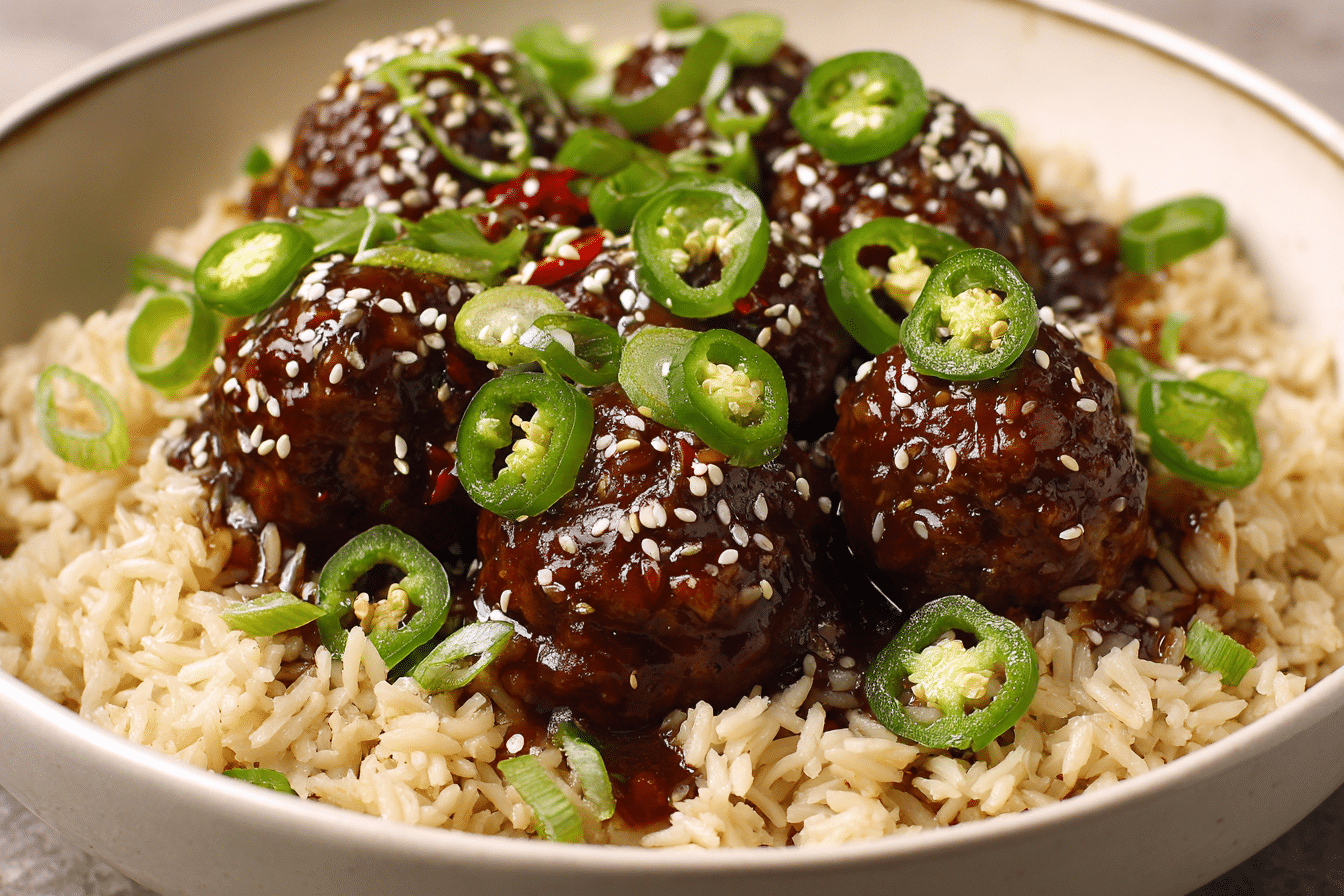
Make it Spicy: Stir chili garlic sauce or red pepper flakes into the glaze.
-
Low-Carb Option: Skip the breadcrumbs and use almond flour instead. Replace brown sugar with a low-carb sweetener like monk fruit.
-
Make Ahead: Cook and freeze the meatballs. Reheat them in sauce for a quick weeknight meal.
-
Pork or Turkey: Substitute ground pork or turkey for beef. For turkey, add 1–2 teaspoons of oil to the mix to prevent dryness.
-
Vegetarian Version: Use a plant-based ground beef substitute and vegan egg replacer.
Serving Ideas & Occasions
These Mongolian Beef Meatballs are versatile and can be styled for multiple occasions:
-
Weeknight Dinner: Serve over jasmine or brown rice with sautéed greens.
-
Party Appetizer: Use toothpicks or mini skewers and serve on a platter.
-
Lunch Prep: Pair with rice or noodles in meal prep bowls.
-
Lettuce Wraps: Spoon meatballs into butter lettuce leaves for a lighter option.
-
Asian-Inspired Sliders: Tuck into small buns with slaw and extra sauce.
Their glossy glaze and bold flavor make them an instant favorite on any table.
Nutritional & Health Notes
Mongolian Beef Meatballs are high in protein and rich in flavor. If made with lean ground beef and baked rather than fried, they’re a satisfying but lighter alternative to traditional fried dishes.
Using whole-grain rice and pairing with fiber-rich vegetables can balance the carbs and sugars in the sauce. To reduce sodium, opt for low-sodium soy sauce.
For keto or paleo versions, swap the brown sugar for coconut sugar or monk fruit sweetener, and use grain-free binders.
FAQs
Q1: Can I freeze Mongolian Beef Meatballs?
Yes. Bake the meatballs, cool them, and freeze in an airtight container. When ready to serve, reheat in the sauce over the stove or in a slow cooker.
Q2: Can I make this dish ahead of time?
Definitely. Make the meatballs and sauce up to 2 days in advance. Store them separately and combine before reheating.
Q3: What can I use instead of cornstarch for thickening?
Arrowroot powder or tapioca starch are great substitutes. Just use them in the same quantity.
Q4: Can I cook the meatballs in the air fryer?
Yes. Air fry at 375°F for about 10–12 minutes, shaking halfway through, until browned and cooked through.
Q5: What sides go well with Mongolian Beef Meatballs?
Try steamed rice, roasted broccoli, sautéed snow peas, or a simple cucumber salad.
Q6: Can I make these gluten-free?
Yes. Use gluten-free breadcrumbs and replace soy sauce with tamari or coconut aminos.
Q7: How do I know when the meatballs are fully cooked?
Use a meat thermometer. The internal temperature should be 160°F (71°C) for ground beef.
Mongolian Beef Meatballs – Sweet, Savory & Perfectly Glazed
Juicy meatballs coated in a sweet, savory Mongolian-style glaze made with soy, garlic, and ginger. Perfect as a main dish or appetizer.
Ingredients
For the Meatballs:
-
1 lb ground beef
-
1/2 cup breadcrumbs
-
1 egg
-
2 cloves garlic, minced
-
1 tbsp grated ginger
-
2 scallions, finely chopped
-
2 tbsp soy sauce
-
Salt and pepper to taste
For the Sauce:
-
1/3 cup soy sauce
-
1/4 cup water
-
1/3 cup brown sugar
-
1 tbsp cornstarch
-
1 tbsp rice vinegar (optional)
-
2 tsp minced garlic
-
1 tbsp grated ginger
-
1/2 tsp sesame oil
Instructions
-
Preheat oven to 400°F.
-
Mix all meatball ingredients in a large bowl. Form into 1½-inch balls and place on a baking sheet.
-
Bake for 15–18 minutes or until cooked through.
-
In a saucepan, combine sauce ingredients. Bring to a simmer and cook until thickened.
-
Add cooked meatballs to the sauce and toss to coat. Simmer for 2–3 minutes.
-
Garnish with scallions and sesame seeds. Serve hot.
Notes
-
Make spicy by adding chili garlic sauce.
-
Use tamari and gluten-free breadcrumbs for a gluten-free version.
-
Store leftovers in the fridge for up to 3 days or freeze.